


The transition from electric-vehicle battery production to stationary energy storage is becoming an important engineering and commercial discussion. On November 18, 2026, pv magazine reported that Moment Energy had launched Nova, a commercial and industrial battery energy storage system built from repurposed EV battery packs. The report described the need to screen second-life modules for state of health, internal resistance, physical integrity and available usage history before assembly.
A separate analysis published by Foley & Lardner on November 19, 2026, examined the different warranty, operational, supply-chain and product-liability considerations that automotive companies face when moving toward stationary storage. These two public sources describe a wider industry direction; they do not establish any performance or compliance claim for a particular relay supplier.
For control-panel builders, battery-pack integrators and component manufacturers, the practical implication is clear: a relay that was accepted in an automotive application should not be transferred into an ESS project without an application-specific validation framework. Stationary storage can involve different enclosure conditions, switching sequences, service models, duty cycles and documentation requirements. The relay interface must therefore be connected to a traceable quality process that follows the component from specification through field service.
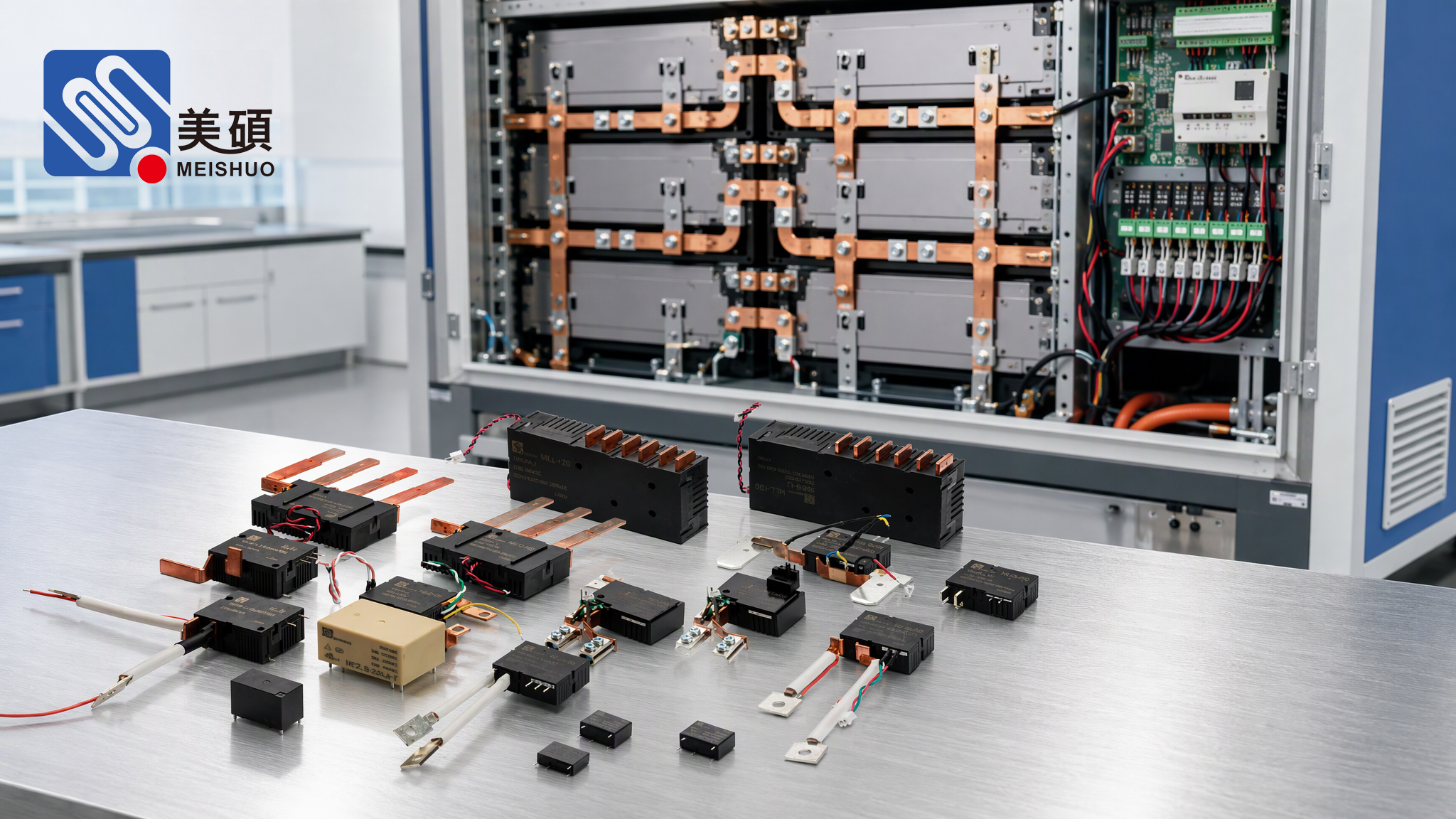
Industrial relay validation framework for second-life EV battery energy storage systems
Scope and safety note: This article is an engineering framework, not a substitute for the relay datasheet, battery-system design review, applicable safety standards or qualified high-voltage service procedures. Product ratings, certifications and test limits must be confirmed from the applicable technical documentation.
A reliable validation framework starts by defining exactly what is being validated. “Relay for EV batteries” is not a sufficient engineering description. The team should identify the relay configuration, coil or control interface, contact arrangement, mounting method, terminals, surrounding conductors and the system function assigned to the component.
The application boundary should also identify whether the device is used for main isolation, pre-charge, auxiliary control, discharge management or another defined function. Each role can involve a different switching sequence and a different consequence if the contact state does not match the controller command.
For a supplier, the boundary should be reflected in controlled documents: approved drawing or specification, revision status, production identification, inspection record and any application notes that have been agreed with the customer. For an integrator, the same information should be linked to the battery configuration, BMS logic and service procedure.
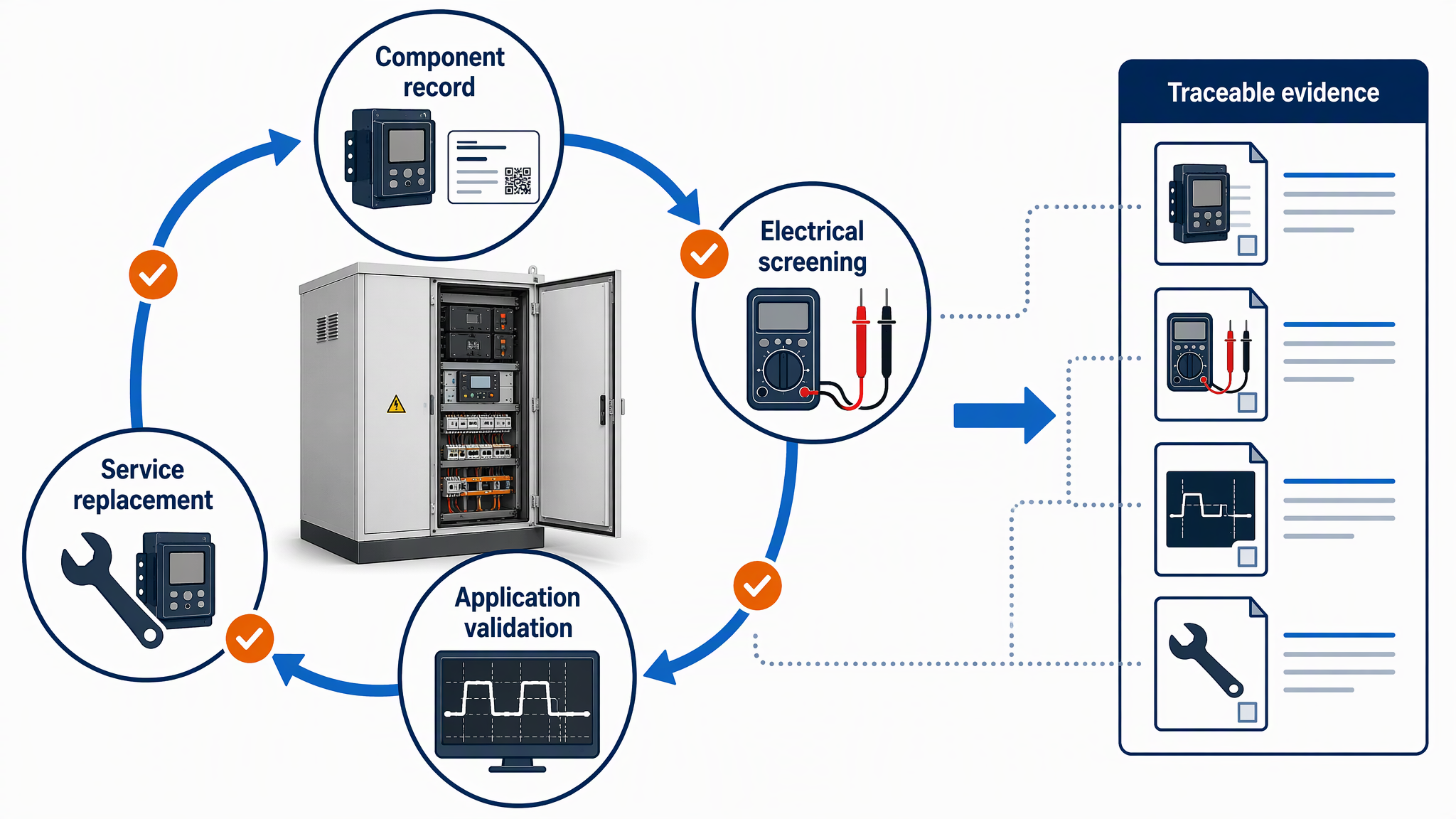
Traceable ESS relay validation and service evidence workflow
The move from automotive supply to stationary storage can change the commercial relationship as well as the technical application. Foley & Lardner’s November 19 analysis highlighted differences in warranty, service, cybersecurity, supply-chain and liability considerations when companies move toward energy storage. For relay suppliers and integrators, this reinforces the need to define responsibilities clearly.
Before project release, the parties should clarify:
• Which product configuration and technical revision are approved?
• Which application conditions are included in the validation scope?
• Which records are supplied at shipment, commissioning and service replacement?
• How are field anomalies reported, analyzed and closed?
• Which changes require engineering approval before production use?
• How are replacement parts identified and verified in the service process?
These questions support engineering cooperation without turning an application framework into an unsupported certification claim. They also help prevent a common failure mode: a component is technically acceptable, but the surrounding documentation is too weak to support production release or field troubleshooting.
Second-life EV battery integration can create new opportunities for energy-storage manufacturers, but it also requires a more disciplined approach to component validation. A relay quality framework should connect product identity, battery-population definition, main isolation and pre-charge mapping, electrical screening, thermal and mechanical review, application validation and service traceability.
The November 18 pv magazine report and the November 19 Foley & Lardner analysis provide current public context for why this work matters. The engineering response should remain specific and evidence-based: define the application, verify the actual system conditions, document the approved configuration and preserve the records needed for future service.
If you are planning a relay integration or industrial control panel project, contact Meishuo to discuss your technical requirements and explore a suitable solution for your system.
1. pv magazine: Moment Energy launches new second-life BESS for C&I market — published November 18, 2026.
2. Foley & Lardner: From EVs to Energy Storage — published November 19, 2026.
3. Meishuo relay product and application resources — replace with the confirmed internal product-page URL before publication if needed.

 Chat Oline
Welcome to www.msrelay.com (the "Site"), operated by Meishuo Electric ("Meishuo", "we", "us"). We respect your privacy and are committed to protecting the personal information you share with us. This Privacy & Cookie Policy explains what information we collect, how we use it, and the choices you have.
Information you provide: when you submit an inquiry or contact form, we collect your name, email address, phone number, country, and the content of your message, so that we can respond to your request and provide quotations or technical support.
Information collected automatically: when you browse the Site, we may automatically collect standard technical data such as your IP address, browser type and version, device type, pages visited, and time spent on pages. This data is used in aggregated form only.
The Site uses cookies and similar technologies for the following purposes:
• Essential cookies – required for the Site to function (for example, remembering your language preference or that you have dismissed the cookie notice).
• Analytics/performance cookies – help us understand how visitors use the Site so that we can improve its content and structure. These are only set with your consent.
You can accept or reject non-essential cookies via the cookie banner shown on your first visit. You may also delete or block cookies at any time through your browser settings; please note that disabling essential cookies may affect the functionality of the Site.
We use the information we collect to: respond to inquiries and provide customer support; process quotation and sample requests; improve and optimize the Site; ensure the security of the Site; and comply with legal obligations. We do not sell, rent, or trade your personal information to third parties for their marketing purposes.
We may share your information only with: service providers who help us operate the Site and our business (for example, website hosting and email delivery services), bound by confidentiality obligations; or where required by law, regulation, or legal process.
We take reasonable technical and organizational measures to protect your personal information against unauthorized access, loss, or alteration. Inquiry data submitted through the Site is transmitted to and stored on servers managed for our business use only.
Depending on your location, you may have the right to request access to, correction of, or deletion of your personal information held by us, and to object to or restrict certain processing. To exercise these rights, please contact us using the details below.
The Site may contain links to third-party websites. We are not responsible for the privacy practices or content of those websites, and we encourage you to review their privacy policies.
We may update this Privacy & Cookie Policy from time to time. The current version is always available on this page, and the "Last updated" date below reflects the most recent revision.
If you have any questions about this Privacy & Cookie Policy or our handling of your personal information, please contact us:
Meishuo Electric
Email: ms@msrelay.com
Phone/WhatsApp: +86-18357779662
Address: Wenzhou, Zhejiang, P.R. China
Last updated: November 12, 2026