


Industrial automation relay reliability is becoming more important as manufacturers modernize operations with connected controllers, edge data, robotics, analytics and software-defined decision support. Recent industry commentary on 2026 automation priorities emphasizes the need to modernize operational technology, use industrial data responsibly, improve efficiency and refresh hardware that limits secure, real-time operation.
Yet a machine does not act because data exists. It acts when a control decision is converted into a reliable physical response. Between the controller and the load, switching components remain part of that chain. A relay can interface a control signal with a motor, valve, lamp, heater, contactor or other machine function, depending on the system design.
That makes relay selection a system decision rather than a catalogue exercise. The engineering team must consider the controller output, load behaviour, switching frequency, installation environment, thermal conditions, maintenance strategy and supply continuity together.
A modern control architecture may include sensors, PLCs, distributed I/O, industrial networks, edge devices and supervisory software. These layers create more visibility, but visibility does not eliminate the need for a dependable output path.
The relay interface must respond to the controller as intended and switch the connected load under the actual operating conditions. If the coil and control output are not matched, the relay may fail to pull in consistently or may impose stress on the driver. If the load type or inrush is misunderstood, contact wear or unexpected switching behaviour may occur. If the mechanical layout is too compact or the thermal environment is ignored, reliability can be affected even when the nominal electrical selection appears correct.
This is why the relay should be reviewed in the context of the complete machine sequence. What happens at startup? How often does the load switch? What occurs after an emergency stop or power interruption? Does the system require a defined off-state? How will maintenance personnel identify and replace the component? These questions connect component selection with machine behaviour.
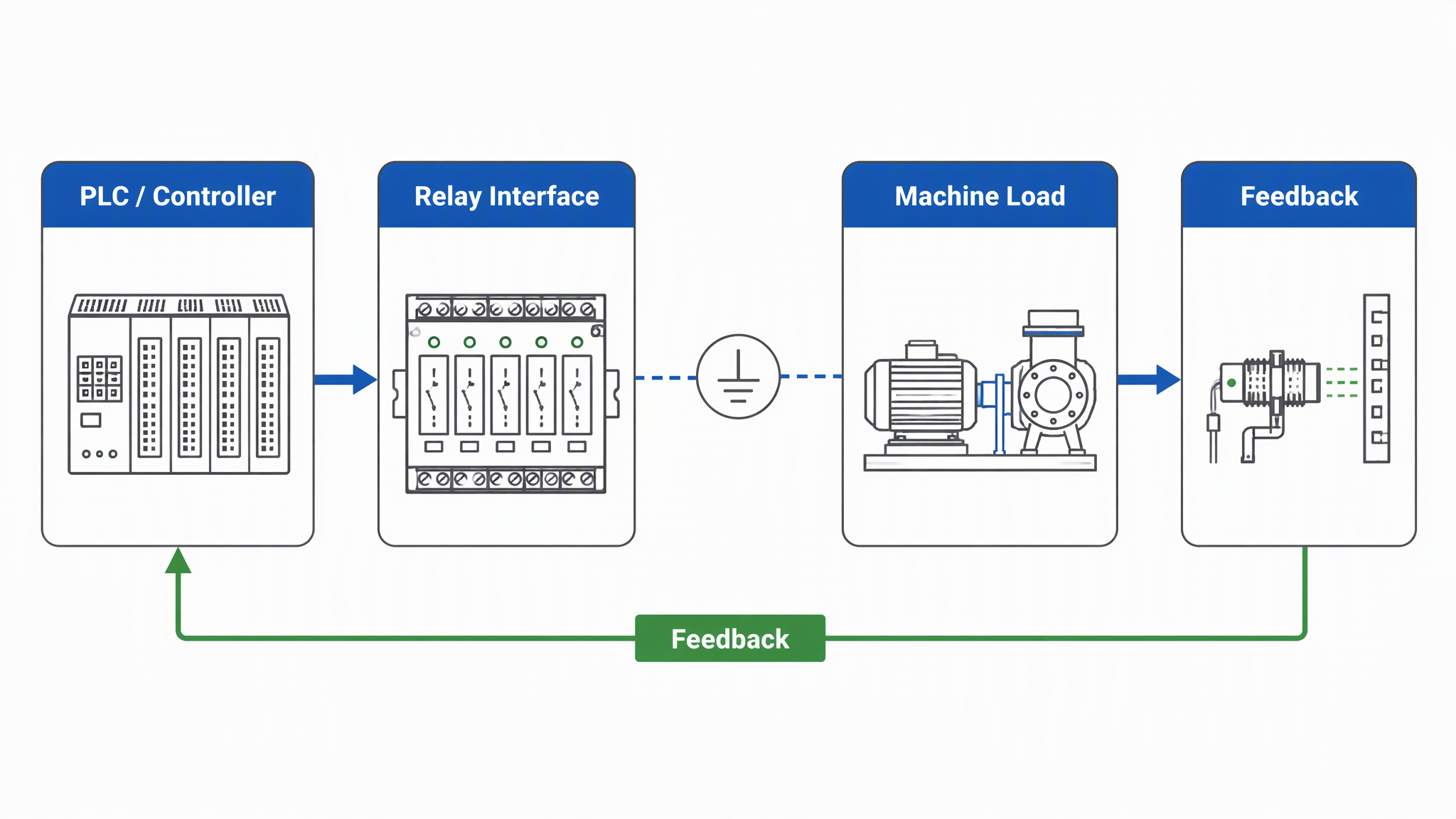
A relay must fit the panel or PCB design while maintaining the required terminal arrangement and service access. Engineers should check the footprint, height, pin layout, mounting method, wiring route and clearance around adjacent components. A part that fits the drawing may still be difficult to assemble or service if the surrounding layout is not considered.
The control side should be reviewed against the actual PLC output or driver circuit. Confirm the required coil condition, switching method and suppression strategy using current technical documentation. Do not infer compatibility from the application name or from a relay that looks similar to an existing part.
The switched load may be resistive, inductive, capacitive or mixed. Motors, solenoids and other loads can create different transient conditions from heaters or indicator circuits. The normal current is only one part of the selection process; startup behaviour, switching frequency, cycle duration and the complete circuit should also be considered.
Industrial control panels may be exposed to heat, dust, vibration, humidity and repeated operation. The relay selection should reflect the actual enclosure and duty conditions. The project team should also define inspection, replacement and end-of-life procedures so that a small component does not become an avoidable source of downtime.
Modernization projects often combine new automation hardware with legacy equipment. A relay supplier should be able to support documentation, samples, application questions and production planning. Where an alternative is required, the replacement must be technically evaluated rather than selected only by package resemblance or nominal rating.
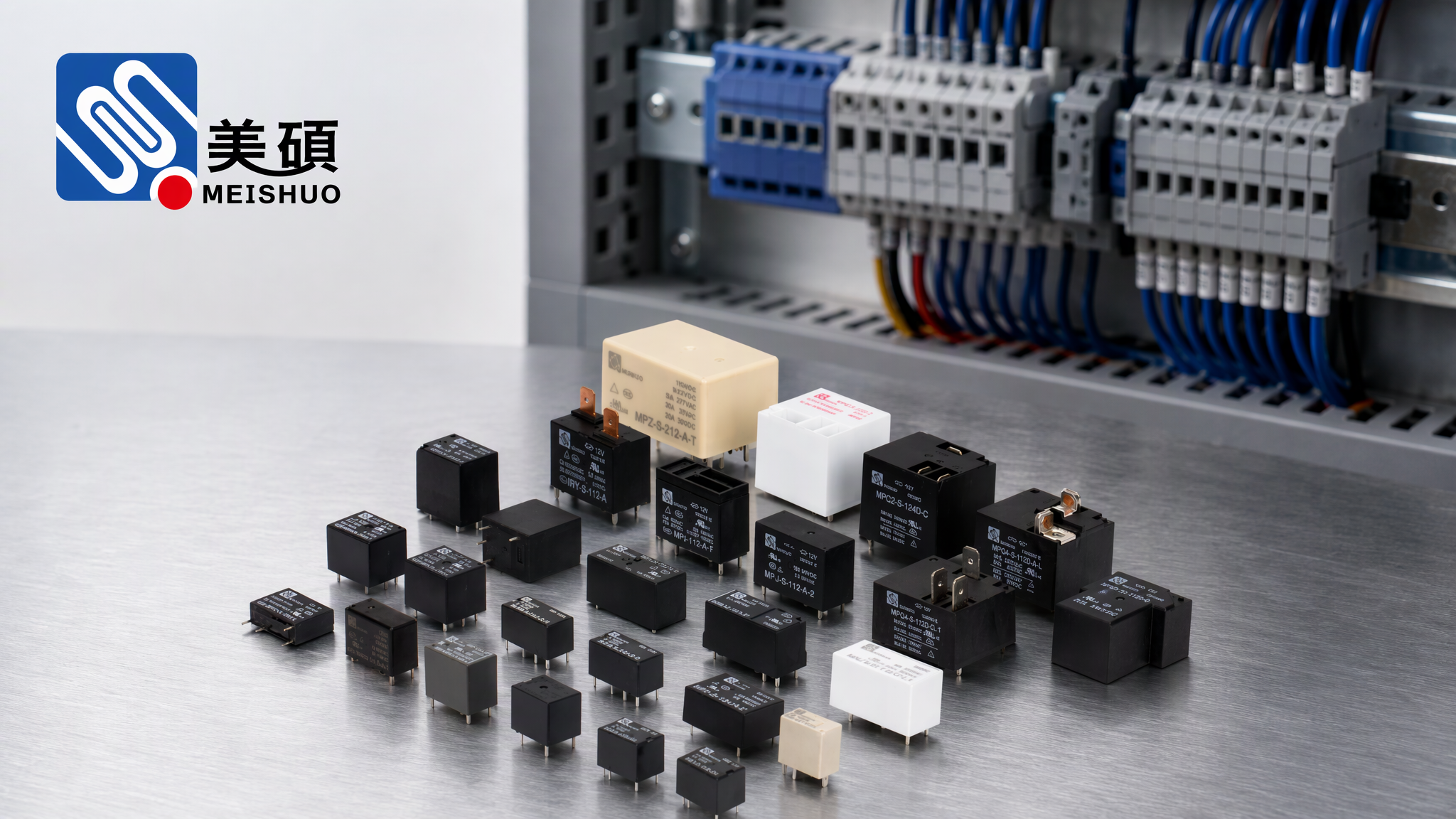
Industry discussions around 2026 automation increasingly focus on modernizing operational technology, connecting proprietary data to useful decisions and improving industrial efficiency. A hardware refresh is not limited to the controller or network layer. Output interfaces and switching components also deserve review because they connect new logic with existing machine loads.
A structured review can identify whether the current relay is limiting panel density, increasing service time, complicating sourcing or creating uncertainty during equipment upgrades. It can also clarify whether the existing component remains suitable for the new duty cycle and control sequence.
For OEMs and system integrators, this review is particularly useful when a machine platform is being adapted for multiple customers or regions. Standardized interfaces, documented alternatives and clear application conditions can reduce repeated engineering work while preserving the ability to customize the final machine.
Before approving a relay for a modular automation system, the project team should document:
Controller output and coil/control conditions;
Load type, normal current and startup or transient behaviour;
Switching frequency, cycle duration and expected service life;
Contact arrangement and required off-state behaviour;
PCB, panel, terminal and wiring constraints;
Temperature, vibration, humidity and enclosure conditions;
Assembly, inspection and replacement access;
Datasheet status, samples, validation method and supply plan.
This checklist does not replace product-specific testing. It creates a common language between controls engineers, electrical designers, sourcing teams, quality personnel and suppliers.
Meishuo supports relay application discussions for equipment manufacturers, industrial-control companies and system integrators. The useful starting point is the customer's actual application: the controller, load, operating sequence, environment, mechanical interface and project stage.
With that information, the selection conversation can focus on the right technical documents, samples and validation questions. The objective is not to make a broad performance claim without evidence. It is to help customers connect the relay's verified characteristics with the needs of the finished machine.
As factories move toward more modular and data-driven operations, dependable switching remains part of the foundation. Software can optimize a process, but reliable hardware is still needed to carry the command into the machine.
The relay connects a control signal with a physical load. Its suitability depends on controller compatibility, load behaviour, switching frequency, environment, mechanical integration and maintenance requirements.
No. The relay coil and control conditions must be compatible with the PLC output or driver circuit. The load side and switching conditions must also be evaluated.
Possible causes include mismatched control conditions, misunderstood load type, inrush or transient stress, excessive switching frequency, thermal conditions, wiring problems and poor mechanical integration.
Yes. When controllers, duty cycles, machine sequences or panel layouts change, the existing switching interface should be rechecked rather than assumed to remain suitable.
Provide the control conditions, load type and current profile, switching sequence, mechanical limits, environmental conditions, validation stage and supply requirements.
External reference: Automation.com — Industrial Technology Predictions for 2026
External reference: Automation.com — Industrial Automation and Control

 Chat Oline
