


MPG Relay is the focus of this week's corporate technology feature from Meishuo Technology. As electrical systems become more distributed, connected and application-specific, relay selection is increasingly tied to the complete control architecture rather than to a single component specification. Designers of industrial equipment, energy-management units and control cabinets need switching components that can be integrated into practical circuits, maintained consistently and evaluated against the requirements of the final application.
Modern control systems often combine sensors, controllers, power interfaces and protection devices in a compact enclosure. The relay provides the electrical interface between the control signal and the switched circuit, allowing a low-power control layer to manage a separate load circuit within the system design. This role is simple in principle, but its reliability depends on the interaction between the relay, the load, the circuit layout, the operating environment and the control strategy.
For equipment manufacturers, the challenge is not merely to select a relay that fits a footprint. The component must also support a repeatable design process. Pin arrangement, housing form, marking clarity and compatibility with the intended assembly method all influence how efficiently a product can move from prototype to production. A stable relay platform can therefore reduce avoidable variation across engineering, procurement and manufacturing teams.
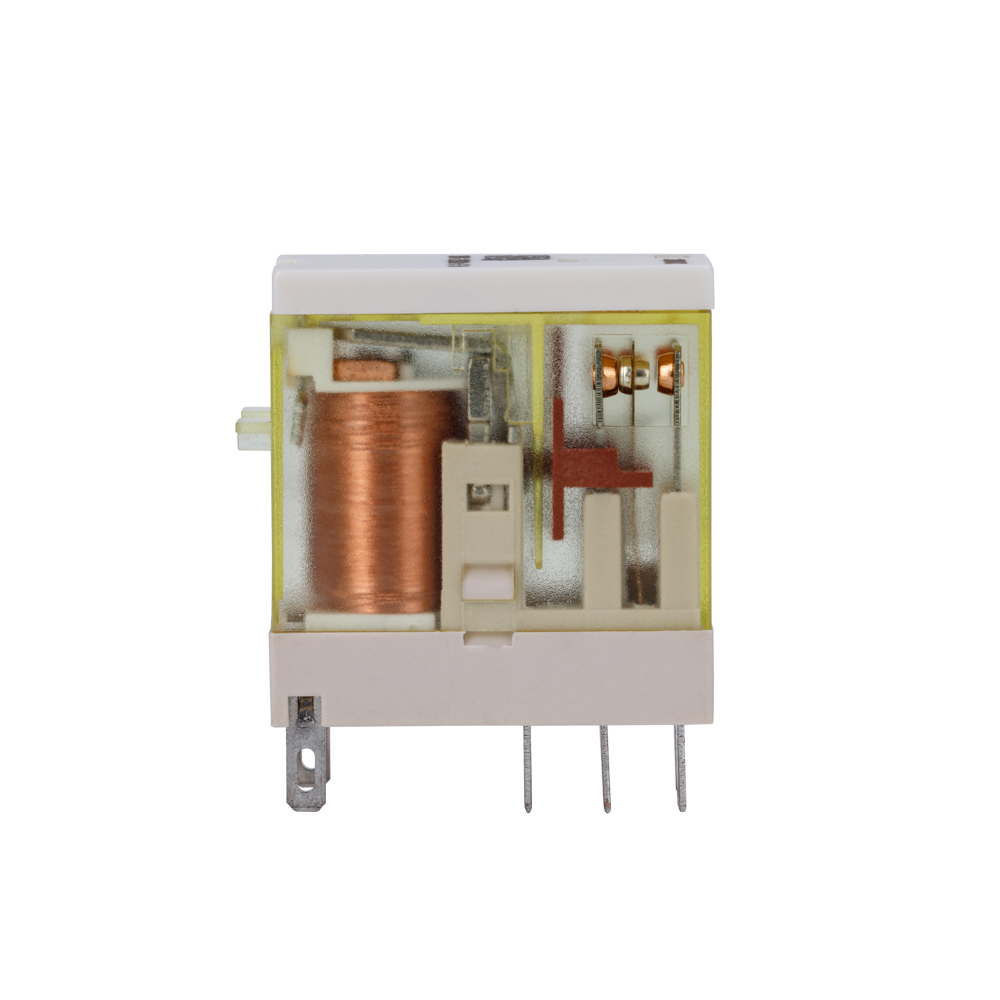
The MPG Relay series is well suited to an application-led discussion because its value is best understood within the system around it. In an industrial control cabinet, for example, a relay may be used to switch an auxiliary circuit, coordinate an actuator or isolate a control output from a downstream load. In an energy-management unit, the relay can form part of a broader switching and monitoring architecture in which multiple devices work together under software or controller supervision.
This system perspective is important as industrial equipment becomes more connected. A relay does not operate independently of the controller or the load. Engineers must consider the electrical behaviour of the application, the switching frequency, the available space, the wiring method and the service conditions. A responsible component story should therefore begin with application matching rather than with a generic promise of universal performance.
A reliable component strategy includes more than the first circuit evaluation. It also considers documentation, incoming inspection, assembly repeatability and traceable quality control. When a relay series is introduced across related equipment platforms, consistent product identification helps engineering and purchasing teams communicate clearly. It also makes it easier to align approved parts, production instructions and service documentation.
For global B2B customers, this consistency is part of supplier confidence. Buyers are not only evaluating a component in isolation; they are evaluating whether a supplier can support a repeatable product-development and manufacturing process. Clear technical communication, controlled product information and disciplined quality practices help reduce uncertainty throughout the supply chain.
Before adopting the MPG Relay series, an engineering team should define the intended load, control method, switching pattern, installation conditions and applicable compliance requirements for the end product. The relay should then be evaluated in the actual circuit environment, including the surrounding protection and suppression design. This process keeps the selection evidence-based and prevents unsupported assumptions from entering the product specification.
The same principle applies to replacement or redesign projects. A relay that appears similar in size may not be interchangeable without reviewing the complete electrical and mechanical interface. Pin configuration, coil requirements, contact arrangement and load behaviour must be checked against the original design documentation and validated in the target application.
The move toward connected equipment is increasing the importance of dependable interfaces between electronics and physical loads. Controllers may become more capable, but the system still depends on the switching components that translate commands into action. This is why relay selection remains a meaningful part of industrial design, even when the relay itself occupies only a small portion of the finished product.
Meishuo Technology's MPG Relay series can be presented as part of this practical engineering conversation: a relay platform for customers who need to connect control logic with real-world electrical functions while maintaining a disciplined path from design evaluation to production. The right choice should always be confirmed against the end application's circuit, load and compliance requirements.
As industrial systems continue to combine power control, sensing and communication, component suppliers will be expected to provide more than a catalogue entry. They will need to support application understanding, product consistency and transparent technical communication. The MPG Relay series gives Meishuo a focused platform for engaging with engineers and purchasing teams working on distributed energy equipment, industrial automation and connected control products.
For customers reviewing a new relay design, the recommended next step is to share the target application, circuit conditions and integration requirements so that the appropriate product configuration can be evaluated directly.

 Chat Oline